 by Admin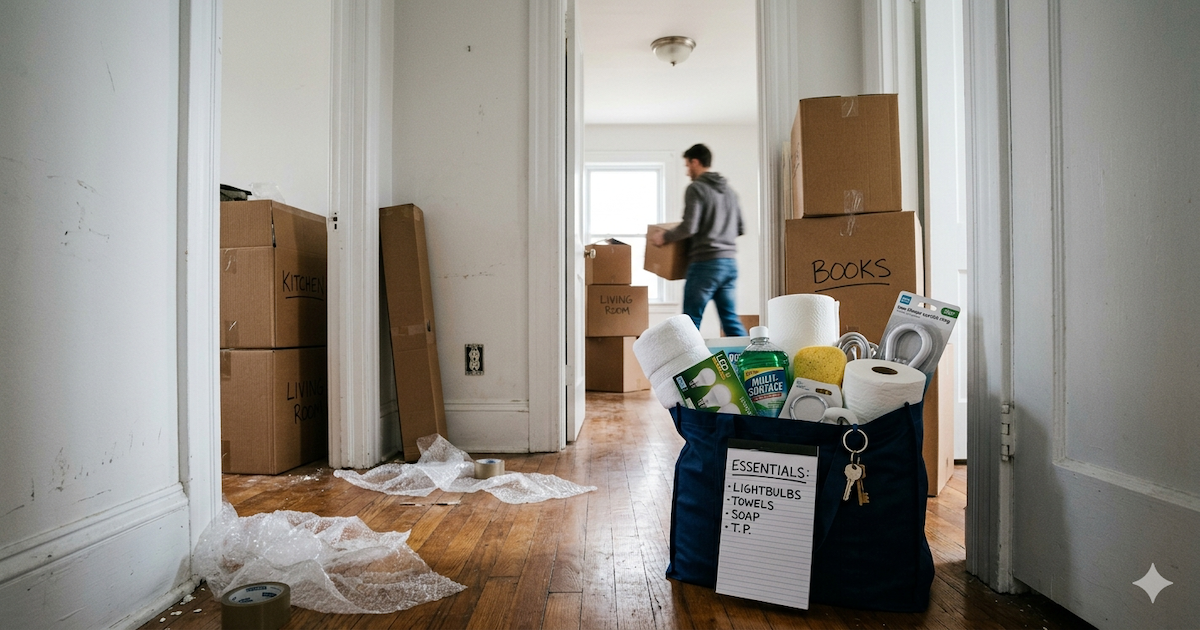
There’s a specific kind of chaos that hits about two hours after you get the keys. You need a shower. You can’t find a towel. The outlet you need is behind a wall of boxes. And somehow you have four phone chargers but not a single lightbulb.
Moving does that. It exposes every gap in your setup all at once.
This list isn’t about filling your cart with things that look good on a checklist. It’s about the stuff that actually makes the first few weeks easier — whether you’re renting your first place, closing on a condo, or getting a unit ready for a tenant.
Day one gaps you won’t see coming
The first night teaches you more than any list can. You figure out fast what you forgot. Common culprits: no shower curtain liner, no place to charge anything, no way to hang anything up.
A few things worth having before you unpack a single box:
- Shower curtain liner — easy to overlook, impossible to skip
- Power strip with surge protection — new places never have outlets where you want them
- Basic tool kit — you’ll need it for curtain rods, furniture assembly, and that one loose cabinet handle at 10 p.m.
The tool kit in particular is one of those things people skip, then immediately regret. It’s not exciting. It’s just quietly necessary for almost everything you do in the first week.
Comfort before decor — every time
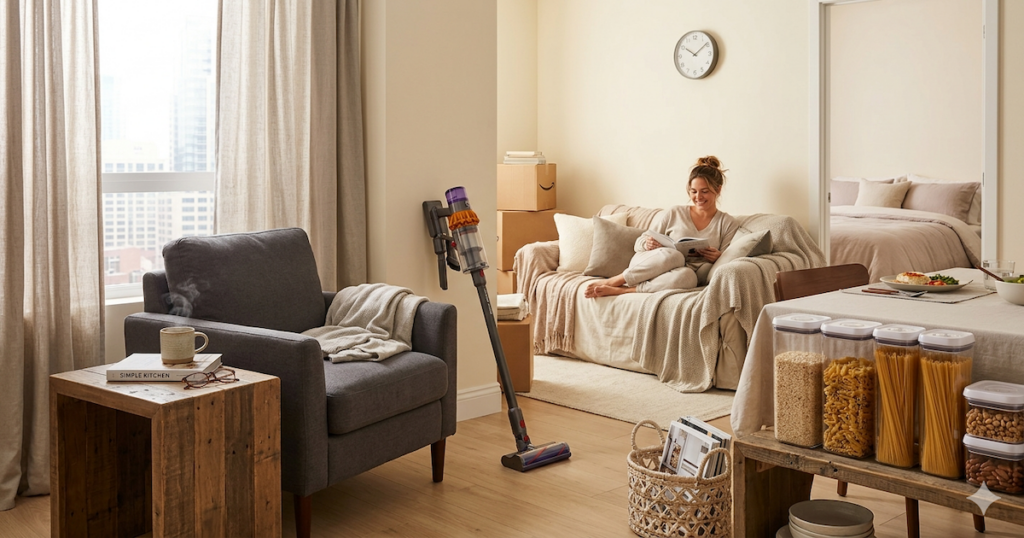
It’s tempting to jump straight to the fun stuff. A lamp here, a plant there, maybe some wall art. But if your space isn’t comfortable yet, none of that lands the way you want it to.
Prioritize the things that support your daily routine first. Bedding that actually fits the mattress. Blackout curtains if you’re a light sleeper. Kitchen basics that let you cook something simple instead of ordering out every night.
Airtight food storage containers are a good example of something small that improves a lot. They keep cabinets from becoming a mess, make meal prep easier, and quietly reduce how much food you throw away. Small upgrade, bigger impact than the price suggests.
A cordless stick vacuum fits the same logic. Lightweight, quick to grab, easy to use. When cleaning takes less effort, you actually do it. That matters more in a new place than you’d think.
Buy things that pull double duty
The items worth buying early are the ones that earn their space. Before you add something to the cart, ask whether it solves more than one problem — or at least one problem more than once a week.
A tool kit handles furniture assembly, repairs, and wall hanging. A surge protector manages your work setup and protects your electronics at the same time. Storage containers work for the kitchen now and come with you on the next move.
Anything that removes friction from your day is worth the space it takes up. Anything that just looks useful on a shelf probably isn’t.
A simple approach to budgeting the move
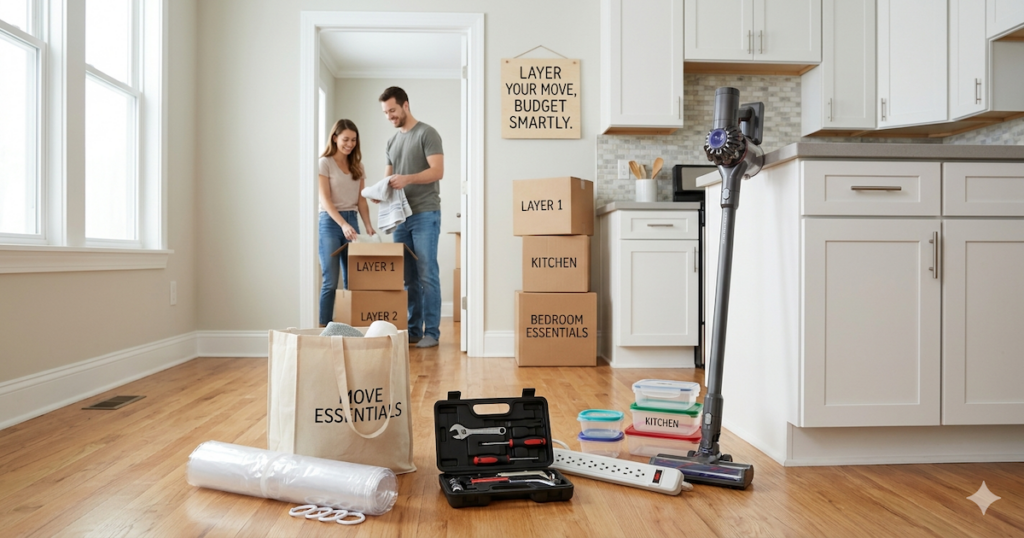
One of the quieter mistakes people make when moving is buying too much too fast. An empty apartment can make it feel like everything is urgent. Most of it isn’t.
A more practical approach: buy in layers. Start with what you need for the bathroom, bedroom, and kitchen to function. Then add cleanup and safety items. Save the comfort upgrades and decor for after you’ve lived in the space for a bit — you’ll have a much better sense of what you actually want by then.
A solid starting list looks something like this:
That covers setup, daily function, and cleanup — which is honestly most of what you need in the first month.
This works whether you’re renting, buying, or investing
First-time renters aren’t the only ones who benefit from a clear list. First-time buyers often underestimate how much goes into setting up a place after closing. And property investors need a quick, reliable reference for what makes a unit feel move-in ready without overspending on staging.
The approach is the same across all three: start with function, layer in comfort, leave room to adjust as you go. The specifics might differ — a tenant cares about a working kitchen, an investor cares about durability — but the core logic holds.
Start small, settle in gradually
Moving is a reset. It doesn’t need to be a marathon shopping trip.
The homes that feel most livable aren’t the ones that were fully furnished in week one. They’re the ones where each thing has a reason to be there. Start with what solves real problems. Add comfort as you figure out what you actually need. Skip the filler.
A few good purchases at the right time beats a full cart of things you’ll eventually donate. Give each item a job, and your place will start feeling like yours a lot faster than you’d expect.